Kochertal Viaduct Engineering
Germany's highest bridge: structural integrity and A6 Autobahn logistics.
Analyzing the structural integrity and crossing logistics of Alpine viaducts.
Elevated alpine crossings represent a pinnacle of brutalist civil engineering. Passing over deep forest valleys in Germany or traversing glacial canyons in Switzerland exposes high-profile vehicles to extreme aerodynamic shifts. The TauernTunnel Bond research division has meticulously cataloged the crosswind susceptibility of structures like the Kochertal Viaduct (Germany's highest bridge) and the Landwasser Viaduct. When a transport vehicle exits a dense mountain cut and instantly enters an unprotected bridge deck at 130 km/h, the lateral wind friction coefficient can trigger sudden, catastrophic destabilization.
By leveraging our digital Premium Alpine Transit Bundles, transport coordinators and luxury drivers gain access to critical meteorological algorithms predicting wind-shear velocity across these specific architectural spans. We provide high-fidelity structural data, including optimal crossing velocities and the geometric layout of wind-deflector barriers installed on specific European grids. Ignorance of these parameters is not an option for professional transit management.
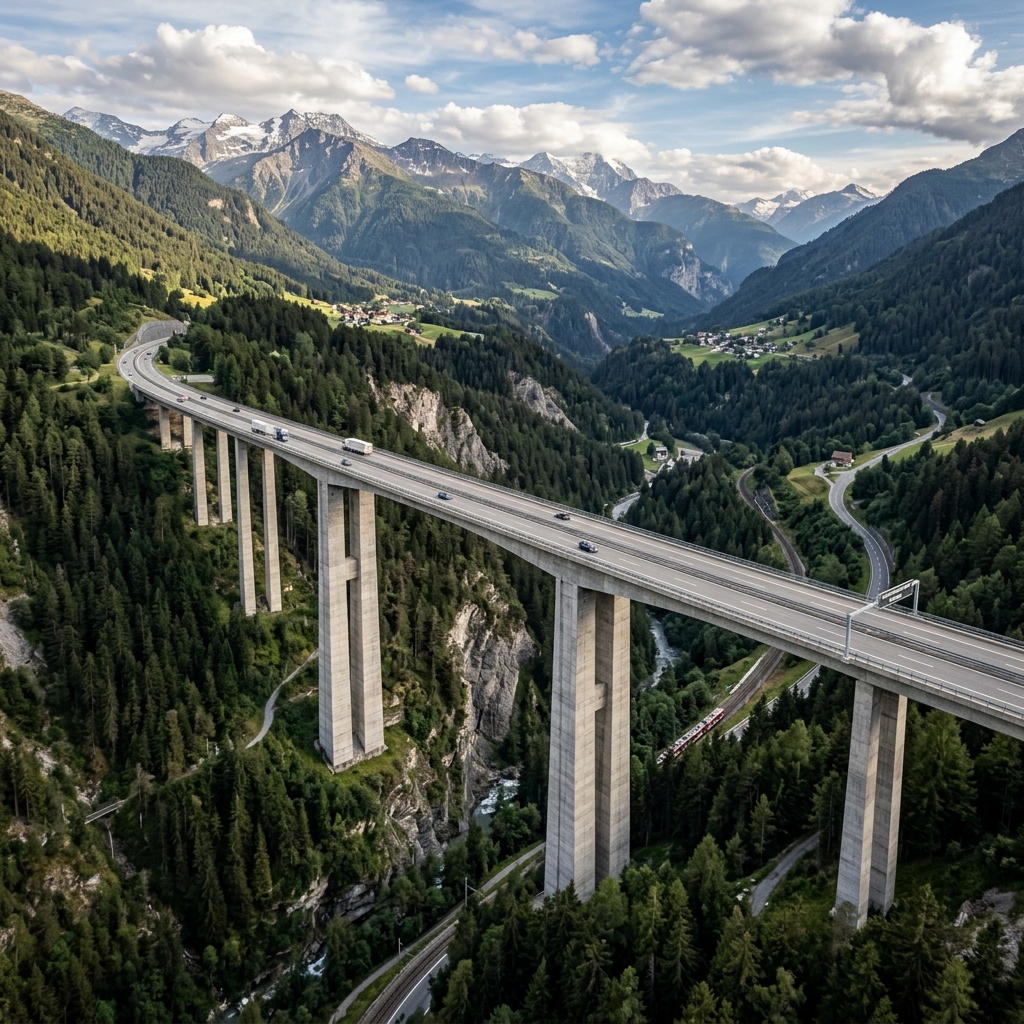
Germany's highest bridge: structural integrity and A6 Autobahn logistics.
Swiss precision engineering bridging deep alpine gorges.